
The Honda Fit is a five-door hatchback subcompact car and manufactured by the Honda Motor Company of Japan. It was first introduced in June 2001 and is now in its second generation. The Fit shares Honda's Global Small Car Platform with the City/Fit Aria, Airwave/Partner, Mobilio, Mobilio Spike, Freed and Freed Spike. The nameplate Jazz is used in Europe, some parts of Asia, Australia, Oceania, the Middle East, and Africa — while the name "Fit" is used in Japan, China, and the Americas. Fit/Jazz is sold in about 115 countries and produced at ten plants in eight countries/regions. Worldwide cumulative sales of Fit/Jazz has reached 3.5 million by July 2010. The Honda Fit debuted in June 2001 in Japan and immediately became a big hit. By December 2001, it had outsold the Toyota Corolla, and ranked first in sales for nine out of twelve months in 2002. It subsequently was introduced in Europe (early 2002), Australia (late 2002), South America (early 2003), South Africa and South-East Asia (2003), China (Sep 2004), and Mexico (late 2005). A production model for the United States and Canada debuted on January 8, 2006 at the North American International Auto Show in Detroit. The car was released in Canada on April 3, 2006, and in the U.S. on April 20, 2006. In the North American markets, the first generation Fit was replaced after only three model years by a new 2009 model, which was released for Japan in November 2007 as a 2008 model. Subsequent iterations will maintain the same platforms worldwide. Honda originally intended to name the car "Fitta", but shortened the name in some markets, and renamed it completely in others, upon discovering that in several Nordic languages, "fitta" is a popular and very vulgar slang word for "vulva". The Fit is sold in 6 variations. All Fit/Jazz models throughout the world utilize one of 7 or more distinct codes. Depending on the region, the Fit is available with a 1.2, 1.3 (in Europe referred as 1.4L model), 1.5 liter i-DSI engine, or 1.5 liter VTEC engine. All four engines are based on Honda’s L-series engine family. The 8-valve i-DSI (intelligent dual and sequential) engines use two spark plugs per cylinder, allowing gasoline to burn more completely; therefore, fuel consumption and emissions are reduced while maximum torque at mid-range rpm is maintained. The 1.5 L VTEC engine has the typical 16-valve configuration that can maximize output at high rpm. The Fit's fuel tank location under the front rather than rear seats — combined with a compact, semi-independent, H-shaped torsion beam rear suspension — allows for a lower load platform and increased cargo volume. Noted for its "class leading utilization of interior space and maximum flexibility for people or cargo," the Fit offered approximately twice the storage space behind its rear seat compared with the Toyota Yaris hatchback.


The second-generation Fit debuted for model year 2008 on 17 October 2007 at the Tokyo Motor Show. The vehicle offers a longer wheelbase than its predecessor and is wider and longer overall. Overall height is unchanged, while interior height increased by .3 in. Multi-mode seating and cargo configurations are retained, with redesigned headrests enabling more convenient folding of the rear seats. The cabin features greater interior volume, and boot capacity decreased from 21.3 to 20.6 cubic feet (0.58 m3). North America models are slightly longer, due to a longer fascia; the difference is visible in photos below. Two engines are offered in the new Fit. A 1.3 L (~79 cu in) i-VTEC will produce 98 hp (73 kW) at 6,000 rpm and 98 lb·ft (133 N·m) at 4,500 rpm. This engine will be offered in both European and Asian markets. A 1.5 L (~92 cu in) i-VTEC engine is also offered and produces a maximum output of 117 hp (87 kW) at 6,600 rpm and 106 lb·ft (144 N·m) at 4,800 rpm. This is the only engine available in the American market. A 5-speed manual, 5-speed automatic (4WD only) and CVT transmission are available. The chassis was re-engineered, with structural rigidity increased by 164 percent.
"We are very aware that the predecessor was a little firm, so we spent a lot of time fixing that. But we believe we've got it just right now." —Hitomi
The Fit now features improved ride and handling. Sales of the Fit Hybrid began in Japan in October 2010. The hybrid version starts at ¥1.59 million (around US$19,400), the lowest price for a gasoline-electric vehicle sold in Japan. The Fit Hybrid features a 1.3-litre engine and electric motor, with an estimated fuel economy of 3.3 litres per 100 kilometres (86 mpg-imp; 71 mpg-US) measured in accordance with Japanese 10-15 cycle. The European version, called Jazz Hybrid, will be available in early 2011 and was unveiled at the 2010 Paris Motor Show. The Honda Fit/Jazz for the European and Japanese markets will feature revised headlamps, new front grille, a leather seating option and a new Lime Green exterior color choice. Fuel economy estimated in accordance with European standard is around 65 miles per imperial gallon (4.3 L/100 km; 54 mpg-US) and CO2 emissions of 104g/km. It has the lowest carbon emission of automatic car in the B-segment. In an interview, Kohei Hitomi, the project leader, admitted that to bring CO2 further down will affect some attributes that buyers of the car most value: bigger electric motor and battery will sacrifice space utility; to improve aerodynamics may have to make side mirrors smaller. He said there are benefits for customers to keep all the versatility. The drivetrain is the same drive system as Honda Insight. The advantages of the system are low cost, low weight and can be combined with manual transmission or continuous variable transmission. The car is better suited than its diesel competitors in areas where most superminis inhibit most - city centres. It is more economical in urban conditions. Thanks to the instant torque of the electric motor, it has a much better engine response. Honda has not decided on a U.S. launch for Fit hybrid, according to Koichi Kondo, Executive Vice President of Honda. “As for the future, it's open to question. We will carefully be watching the market situation.” Hitomi, as reported by Automotive News, sees that the current Fit offered in North American market has very good fuel mileage as it is and questions if buyers are willing to pay the extra for marginal mileage gains.


Japanese sales of the first generation Fit greatly exceeded the original monthly sales target of 8,000 units on debut. By December 2001, it had outsold the Toyota Corolla, and ranked first in sales for nine out of twelve months in 2002. With a total sales of 250,790 for the year of 2002, it became the best selling vehicles in Japan, which is a first for a Honda model. By September 2003, a little more than two years after the car was first sold, Fit reached 500,000 sales in Japanese market. After a minor model change (MMC) that went on sale on June 11, 2004, Honda announced that, in about 2 weeks' period after its introduction, the company received orders from customers totaled around 13,000 units. By November 2007, in less than 6 months after minor model change, cumulative sales of Fit reached 1 Million units in Japan. The second generation has been the top selling car in Japan since its official launch in November 2007. By September 2010, cumulative sales in Japan reached 1.5 Million units. In January 2010, Honda announced a recall of 646,000 Fit hatchbacks from 2002-2008 due to a window switch that could catch fire. The recall affected Honda Fit/Jazz models, including about 170,000 Jazz compact cars in the United Kingdom although no window malfunction reports had been received there. This recall was conducted as the company had received reports of master window switch malfunctions on the driver’s door, mostly commonly occur when the driver's window is left open, allowing rain or water to drip into the window switch module, resulting in switch failure and in occasions overheating, eventually possible fire hazards. To address the issue, recalled cars will be fitted with a waterproof skirt to prevent further water entry. Honda will also be replacing malfunctioning and worn-off window switches. Honda offers the change of affected parts free of charge. In January 2011, Honda announced a second recall, this time for a problem that could cause the headlights to fail."Recall Honda Jazz, Watch the Low Beam Headlights". Honda unveiled the Honda Fit EV concept electric car in the 2010 Los Angeles Auto Show. A production version is expected to be launched in Japan and the United States in 2012. The Fit EV uses the Fit compact car platform, powered by a lithium-ion battery pack combined with a high-density coaxial motor derived from the Honda FCX Clarity hydrogen fuel cell vehicle. Honda claims the Fit EV has an all-electric range of 70 to 100 miles (110 to 160 km) and a top speed of 90 miles per hour (140 km/h). Honda also said that recharging the Fit EV will take 12 hours from a 120-volt outlet and six hours with a 240-volt supply. The Fit electric car, like the Honda CR-Z hybrid, will have three distinct driving modes: econ, normal, and sport. Honda explained that "econ" mode will extend the driving range by 17% compared to the normal mode; in sport mode, the Fit EV imitates the acceleration of a small car with a 2.0-liter gasoline engine. The Fit BEV is one of the five finalists to the 2011 Green Car Vision Award. The winner will be announced at the 2011 Washington Auto Show.


 Honda Fit 2011 Look so Elegant
 All Colors from Honda Fit
 Blue Honda Fit on the Road
 Honda Fit Performance
 Honda Fit Concept
 Sporty Red Honda Fit
 Honda Fit Interior
 Honda Fit Multifunction Interior
 The second-generation Fit debuted for model year 2008 on 17 October 2007 at the Tokyo Motor Show. The vehicle offers a longer wheelbase than its predecessor and is wider and longer overall. Overall height is unchanged, while interior height increased by .3 in. Multi-mode seating and cargo configurations are retained, with redesigned headrests enabling more convenient folding of the rear seats. The cabin features greater interior volume, and boot capacity decreased from 21.3 to 20.6 cubic feet (0.58 m3). North America models are slightly longer, due to a longer fascia; the difference is visible in photos below. Two engines are offered in the new Fit. A 1.3 L (~79 cu in) i-VTEC will produce 98 hp (73 kW) at 6,000 rpm and 98 lb·ft (133 N·m) at 4,500 rpm. This engine will be offered in both European and Asian markets. A 1.5 L (~92 cu in) i-VTEC engine is also offered and produces a maximum output of 117 hp (87 kW) at 6,600 rpm and 106 lb·ft (144 N·m) at 4,800 rpm. This is the only engine available in the American market. A 5-speed manual, 5-speed automatic (4WD only) and CVT transmission are available. The chassis was re-engineered, with structural rigidity increased by 164 percent.
 The Honda CR-V is a compact crossover SUV manufactured by the Japanese company Honda since 1995. It was loosely derived from the Honda Civic to satisfy a public demand for a sport-utility vehicle from Honda. There are discrepancies as to what "CR-V" stands for, with Honda sources in different markets citing different meanings. The most common meaning being "Civic Recreation Vehicle" since the is built on the Honda Civic Platform. Though Honda sales literature in UK reportedly makes references to "Compact Recreational Vehicle", other Honda references (including the official Honda Japan CR-V Fact Book and Honda Worldwide) cite "Comfortable Runabout Vehicle". It is produced in both all-wheel drive and front-wheel drive, although in many markets such as Australia and the United Kingdom, only front wheel drive is offered. Honda produces the CR-V in Japan and the United Kingdom for worldwide markets, and as of 2007, North American CR-Vs are produced in East Liberty, Ohio. The CR-V is produced in Wuhan for the Chinese market by the Dongfeng Honda Automobile Company, a joint venture with Dongfeng Motor Corporation. Starting in fall 2007, North American CR-Vs will also be produced in Jalisco, Mexico in addition to Britain, Japan and the US due to high demand. Honda executives considered making the CR-V as one of the first vehicles to be produced at Honda's new facility currently finishing construction in Greensburg, Indiana that opened in fall 2008; however, the facility will initially exclusively produce the Civic, which may free up space in East Liberty for CR-V production from the 2009 model year onward. Elsewhere, the CR-V is Honda's smallest SUV other than the related Element sold in Canada and the United States, and the HR-V sold in Europe. In size, the CR-V slots between the Element and Pilot. Introduced in Japan in 1995, the CR-V was Honda's first in-house designed SUV and was originally intended to be a niche vehicle only. Honda was hesitant to market the vehicle, since many felt the car did not have potential to sell alongside the Honda Passport and to take over the role of Honda's entry-level SUV. In the United States, it was displayed for the first time at the 1996 Chicago Auto Show. Citing strong sales from the comparable Toyota RAV4 upon its release, the model was then brought stateside in February 1997. The CR-V appeared around the same time as the Subaru Forester and a couple years after the JDM Nissan Rasheen.
 Honda's Real Time 4WD system on the CR-V utilizes a Dual hydraulic Pump Rear Differential and 4WD Transfer case. The dual pump rear differental operates the front wheels during normal conditions then automatically transfers power to the rear wheels when needed, without the driver engaging the system. To allow the ABS braking system to work when the CR-V is engaged in four-wheel drive operation, the 4WD will turn off if the brakes are applied. An optional HONDA off road front skid plate and cargo roof rack are both available from Honda Dealerships. Later Model CR-Vs equipped with automatic transmissions also have a lockup torque converter and Grade Logic program which aids the CR-V when climbing steep inclines by keeping the transmission in the lower gear. The 2007 and later Model 4WD system was improved and sends an additional 20% more torque to the rear tires than earlier models. When driven off road, CR-Vs with the AWD System are typically used in the Green Laning or "Two-tracking" type of off roading. Although the body style remained the same as the first generation an update for the CR-V made from 1999 to 2001 was in response to criticism of the original engine lacking enough power for a vehicle of the CR-V's weight – 3,200 lb (1,500 kg). The engine was changed to the 2.0 L B20Z engine, producing 146 hp (109 kW) at 6200 rpm and 133 lb·ft (180 N·m) at 4500 rpm of torque. Fuel economy of 22 mpg-US (11 L/100 km; 26 mpg-imp) City/25 mpg-US (9.4 L/100 km; 30 mpg-imp) Highway (US) and price were not affected by the increase in power, which was the result of a higher compression ratio (9.6:1 compared to the B20B's 8.8:1), a new intake manifold, and slightly higher lift on the intake valves.Models equipped with an automatic transmission now had an overdrive cancel button that allowed the driver to lock the transmission in the first three gears to provide power for passing and climbing grades. The interior was also modified, as some consumers felt that the support provided by the seats was inadequate for longer trips.[citation needed] The pattern of the cloth on the seats was also redesigned.
 On the inside of the car, the EX trim received upgrades which included steering wheel-mounted audio controls and an outside temperature monitor. The stereo system was also XM Satellite Radio ready (USA but not Canada). All CR-V models also had revised rear seat headrests, which had been redesigned to reduce rear view blockage. Mechanically, the 2005 model was also changed. A major change included a drive-by-wire throttle for all CR-Vs. The all-wheel drive system was improved; it had been tuned to activate faster in low traction situations. US market models were equipped with a 5 speed automatic, as opposed to the previous 4 speed automatic. Honda is also offering an integrated Navigation option on the EX-L model. The navigation unit is made for Honda by Alpine and includes voice activated control, XM radio (in the USA and Canada), in dash CD player that can play MP3 and WMA media. It also has a six-disc CD changer in the center console and a PC Card (PCMCIA) slot in the Nav unit for flash memory MP3 or WMA files. A second CD player is behind the navigation screen, this CD player plays MP3/WMA cds. A rear backup camera is also included. For the 2010 model year, the CR-V receives modest style, powertrain, and equipment changes. The exterior changes include a redesigned front fascia with a new horizontal-slat chrome grille and honeycomb-designed lower front grille, new front bumper, and revised taillights. The rear bumper is also redesigned, as well as new five split-spoke 17-inch alloy wheels for EX and EX-L models. The interior gains minor changes, such as improved seat fabrics, and wider driver & front-passenger armrests. The audio head unit controls are altered and the information display backlighting in the gauges is blue instead of the previous black. USB audio input is standard in the EX-L trim while hands-free Bluetooth connectivity is exclusive to the EX-L trim equipped with navigation system. Horsepower is increased from 166 to 180 for 2010 and mileage is improved by 1 MPG for both front-wheel and all-wheel drive models. EPA ratings are now 21/28 MPG city/highway and 21/27 MPG city/highway respectively. Specified oil weight changed from 5W-20 to 0W-20 from previous years with a change to the K24Z6 engine. Prices are increased between $300 and $900 depending on trim level. The 2010 model went on sale in the United States on September 10, 2009.
 The Honda CR-Z is a compact hybrid electric automobile manufactured by Honda and marketed as a "sport hybrid coupe." The CR-Z combines a hybrid gasoline-electric power-train with traditional sports car elements. The CR-Z is regarded as the spiritual successor to the second generation Honda CR-X in both name and exterior design.
 Exotic Honda CRZ
 Two Honda Performance Development CR-Z Racers entered the 25-hour of Thunder-hill endurance race held on December 4-5, 2010 at Willows, California. The car, first shown to the public at 2010 SEMA Show, is fully stripped down with lowered suspension. A turbo charger is bolted to the engine raising output to 175 hp (130 kW) and 155 lb·ft (210 N·m) of torque, furthermore, the Integrated Motor Assist setup is modified and a push-to-pass function is added, making a total of 200 hp (149 kW) and 175 lb·ft (237 N·m) of torque when the button is pressed. One of the two entrants battled from a near 10-lap deficit to finish second in the Endurance 3 class, after suffering early in the race from two five-minute "stop-and-hold" penalties caused by refueling problems. The other entrant scored pole position of the class but failed to finish the race. The Honda CR-Z was one of the most showcased cars during the SEMA show earlier in the year and one of the cars produced 533 hp (397 kW). This is what the hybrid engine could withstand in terms of power.
 Honda CRZ Elegant Interior
 The basic concept of CR-Z is said to create a fun-to-drive sports car driving characteristics Honda aspired from that of the Elise, as well as the Mini and Volkswagen Scirocco. In a video, Torikai, the chief chassis engineer of CR-Z, explained that during the development process “this car was brought to Europe at each prototype stage to be tested under various road conditions to evaluate whether the desired performance had been achieved.”
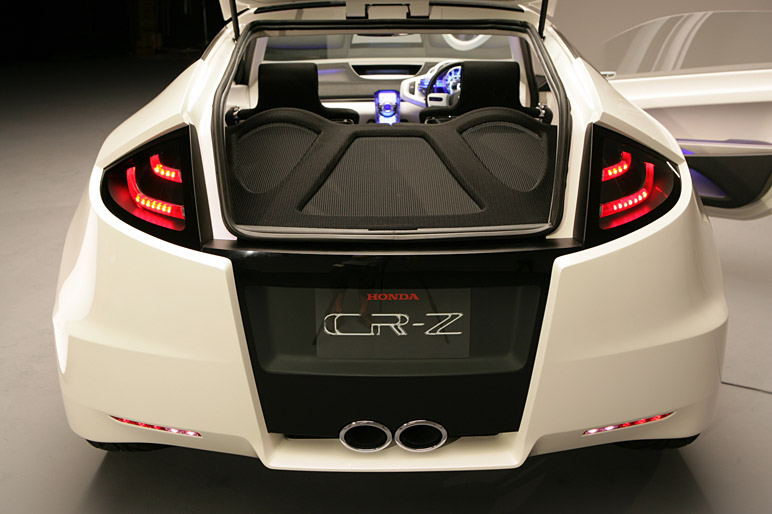 Japanese fuel economy ratings are 4.0 litres per 100 kilometres (59 mpg-US) for CVT and 4.4 litres per 100 kilometres (53 mpg-US) for MT in 10•15 mode; and 4.4 litres per 100 kilometres (53 mpg-US) for CVT and 4.9 litres per 100 kilometres (48 mpg-US) for MT in JC08 mode.
 The CR-Z is powered by a 1.5 L (92 cu in) i-VTEC SOHC inline-4 engine, designated as LEA, with Honda's Integrated Motor Assist (IMA) hybrid-electric system. A six-speed manual transmission is standard equipment and a continuously variable transmission (CVT) is available. The system delivers a combined peak output of 122 bhp (91 kW) at 6000 rpm and 128 lb·ft (174 N·m) at 1000 to 1500 rpm (123 lb·ft (167 N·m) on CVT-equipped models). The gasoline motor itself contributes only 111 bhp (83 kW) at 6000 rpm and 106 lb·ft (144 N·m) at 4800 rpm. An early road test of a Japanese-market CR-Z resulted in 0-60 in 10.5 seconds and the quarter mile in 17.6 seconds. Inside Line performed the same 0-60 test in 8.8 seconds, and Motor Trend, in 8.3 seconds.
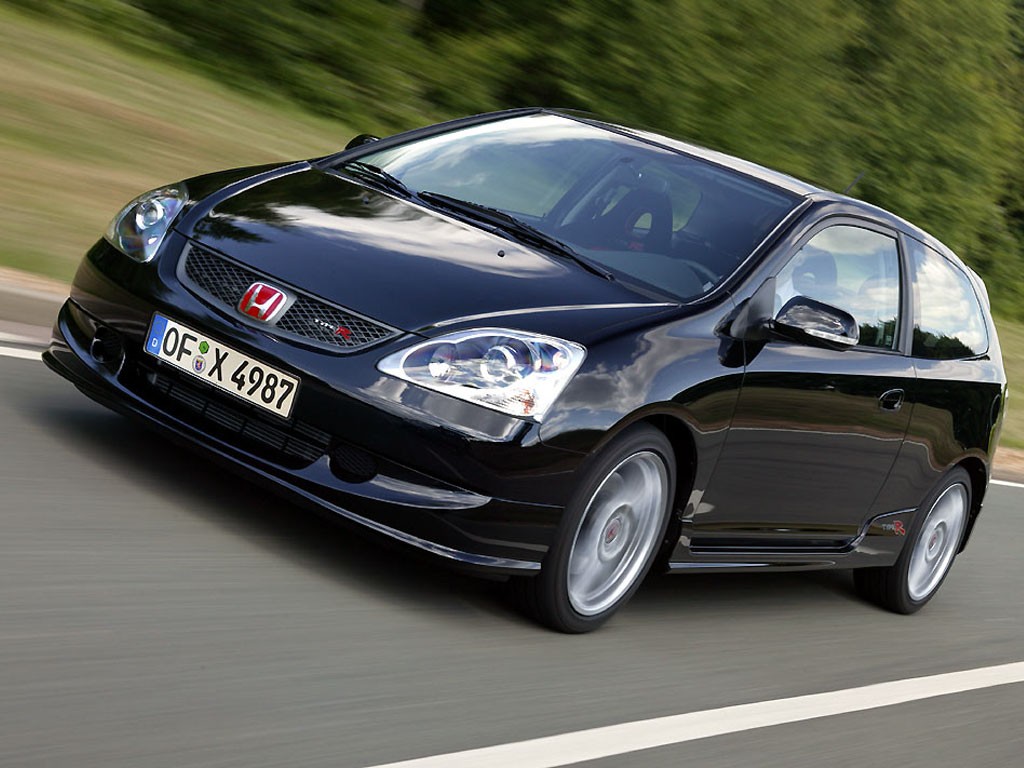 Amazing Black Honda Civic
 Orange Honda Civic
 Elegant White Honda Civic
 Honda Civic Exterior
 White Honda Civic Front View
 Great Model from Honda Civic
 Honda Civic Old Edition

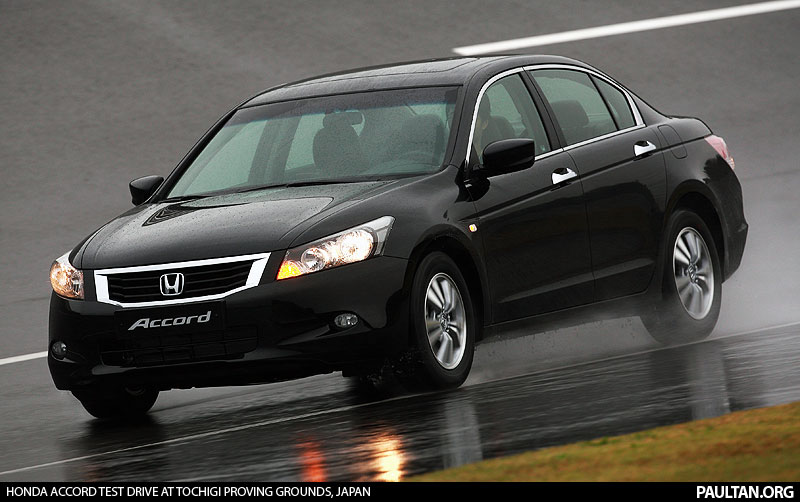 Luxury Black Honda Accord 2011
 White Honda Accord on the Road
 Honda Accord 2011 Concept
 Honda Accord Exterior
 Red Honda Accord 2011
 Elegant Color from Honda Accord 2011
 Honda Accord Sedan
 Black Honda Accord
 Red Honda Accord
 White Honda Accord
 Luxury Honda Accord
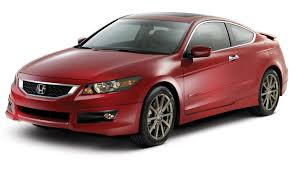 Elegant Red Honda Accord
 Black Honda Accord
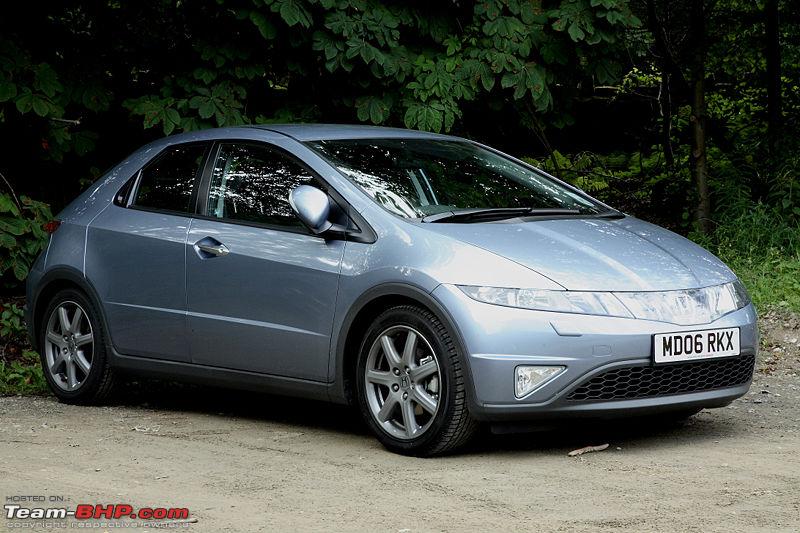 Elegant Silver Honda Civic
 Sporty Blue
 Exotic Tosca
  Fast and Elegant Civic
 Black and White Honda Civic Hatchback
 Red Honda Civic Hatchback


